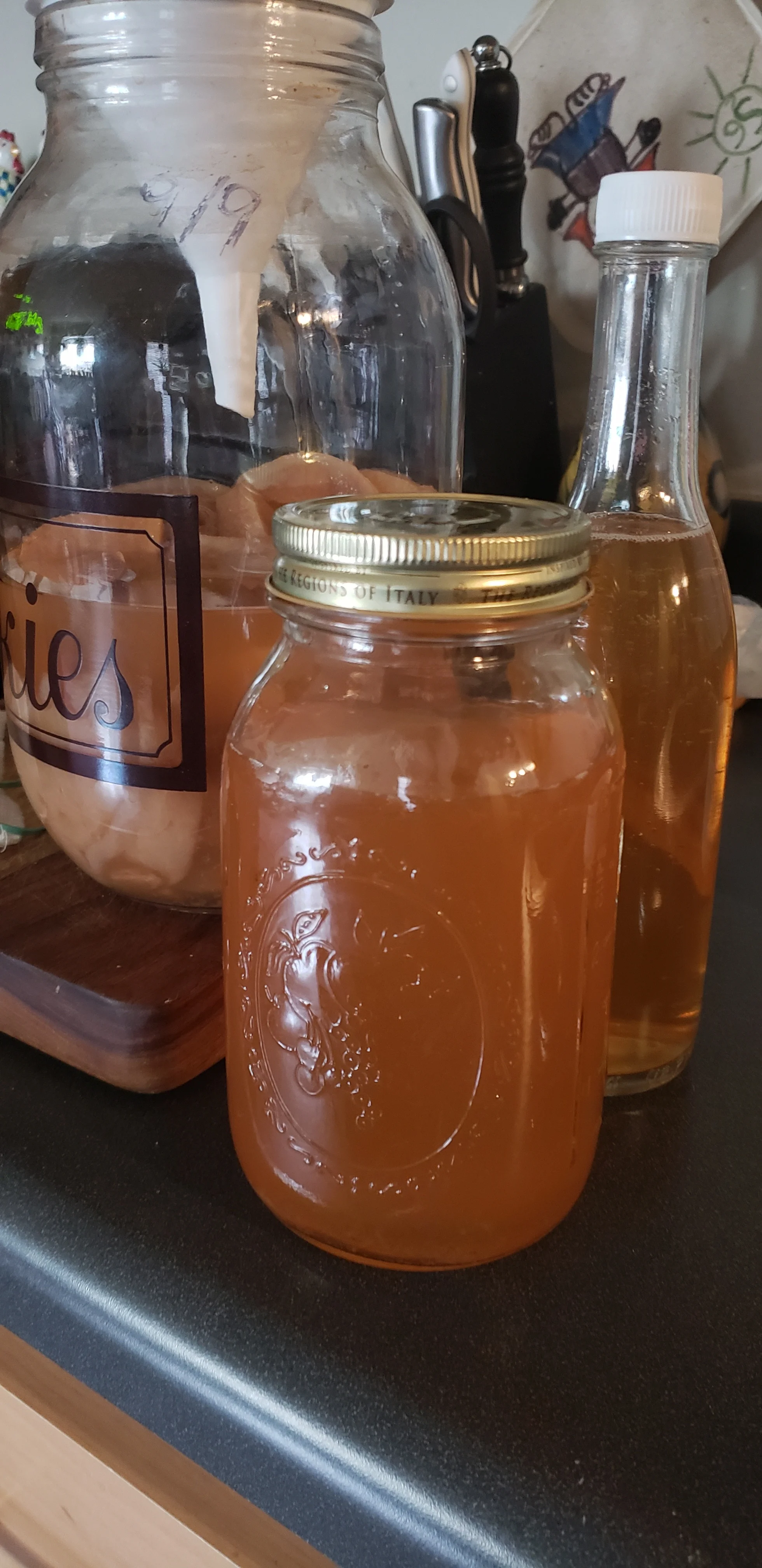
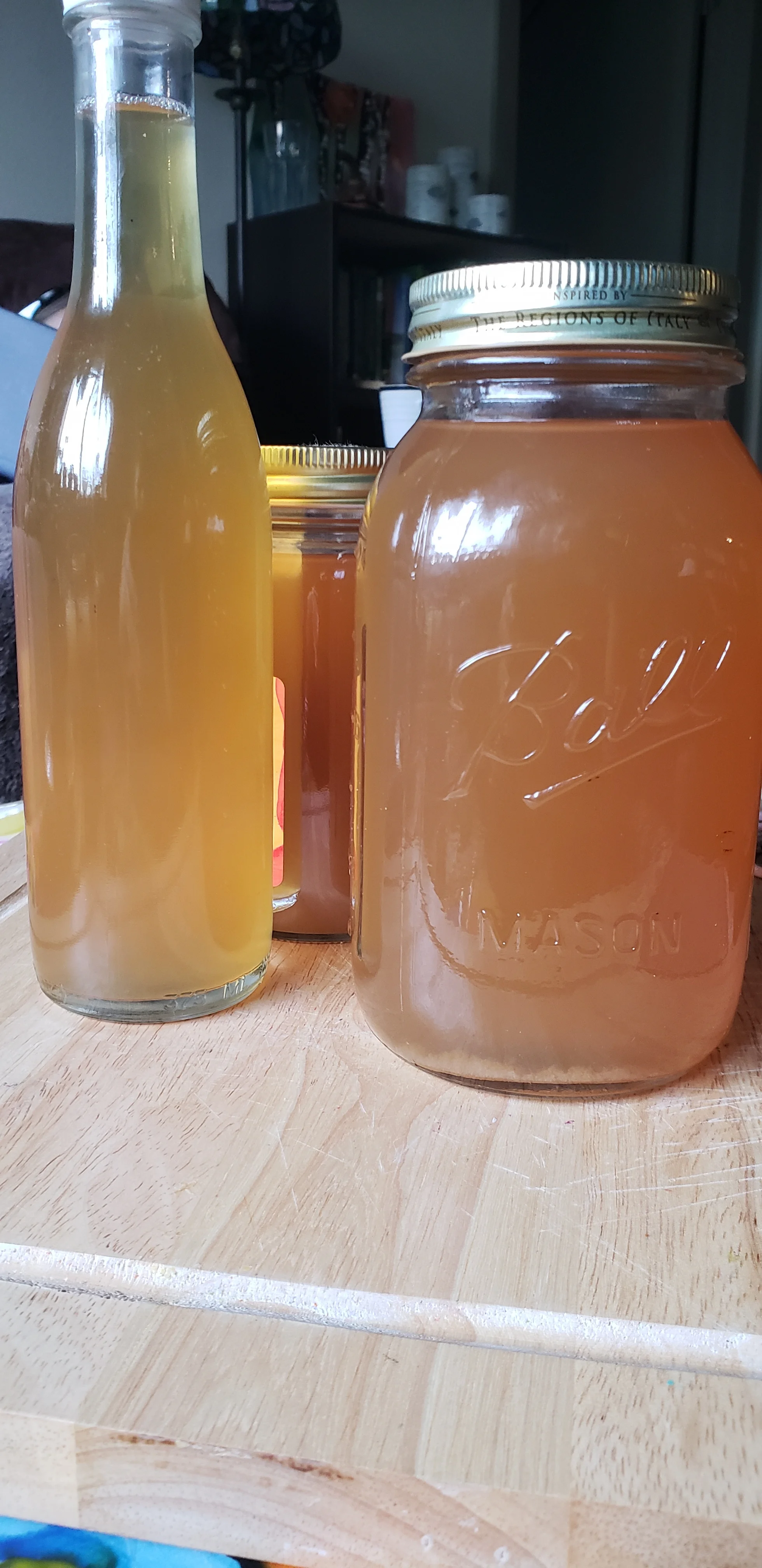
How to Make Organic Apple Cider Vinegar
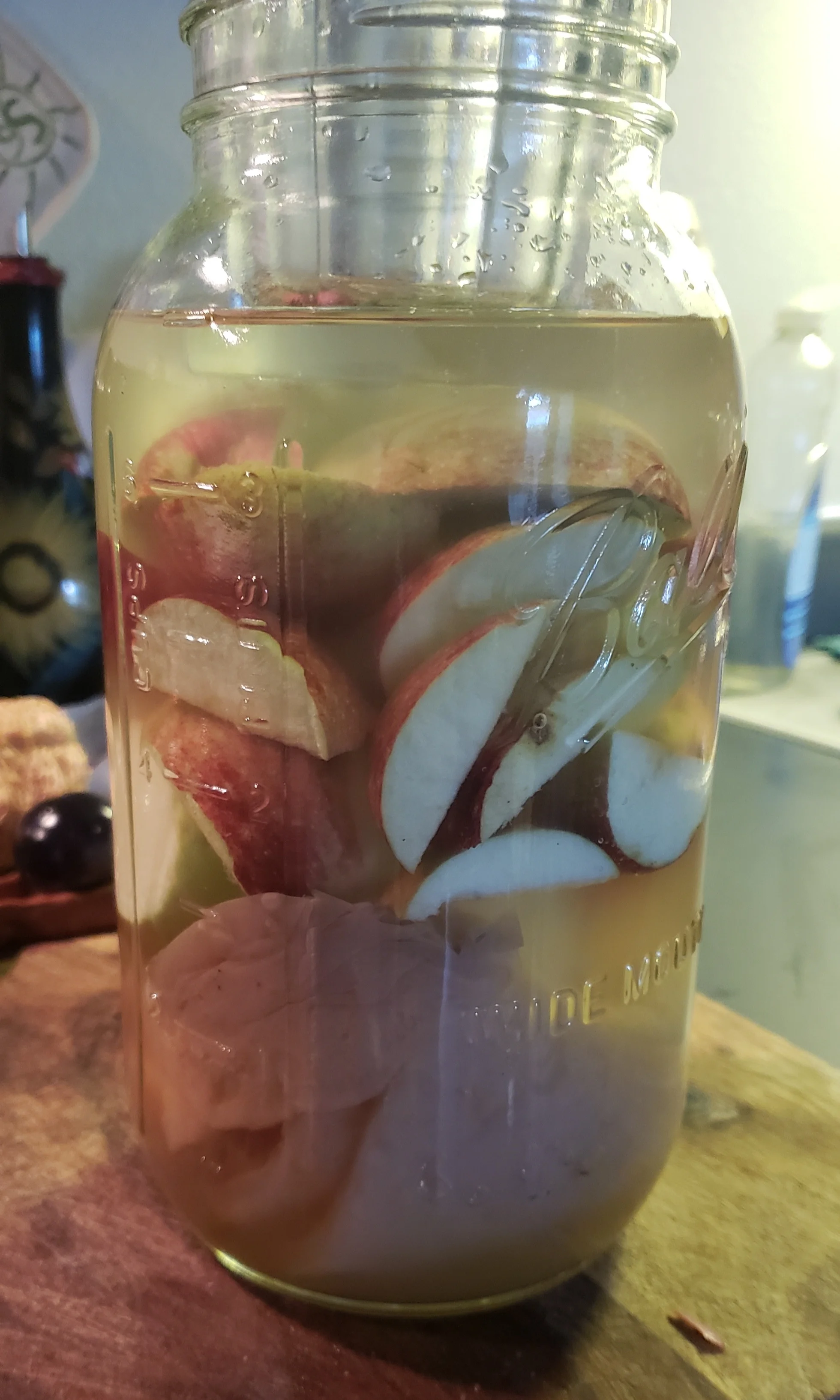
This past Autumn, I was gifted an apple cider vinegar scoby that, if fed fresh apples, will continue to produce vinegar every 1-2 months. A scoby, or symbiotic culture of bacteria and yeast, is pretty nasty looking to some, while others understand fermented foods are crucial in the modern-day American diet. Let me give you a quick tutorial and then you can start your very own Apple Cider Vinegar (ACV).
To Start a Scoby
To begin, any unpasteurized, organic ACV available for purchase in natural grocers will have a mother culture in the bottle. If you don’t have a scoby of your own, this is a good place to start. If you feed this raw, mother culture a bit of cane sugar and fresh cut apples in filtered water, then let sit for 2 months, you will have a full-grown ACV scoby!
Now, once you have an ACV scoby, this is when the larger batches of vinegar begin to brew. The perfect time to make it is during apple harvest, so that you can use fresh, organic apples right from the tree. However, if this isn’t possible throughout the year, just pick up a few organic apples from the grocery store.
The ACV Process
In a large glass jar, add roughly chopped ~
1-inch of turmeric (or 1 tsp dried)
2-3 inches of ginger (or 1 tsp dried)
1 head of garlic (or 1 tbsp dried)
1 large onion (or 1 tbsp dried)
4 inches of horseradish root (or 1 tbsp of minced jarred horseradish)
1 habanero pepper or alternative spicy pepper
1-2 lemons (one large or two small) with peel
1 tsp black peppercorns, sprigs of oregano, sage, thyme, as desired
and/or any other healing herbs such as calendula, elderberry, nettles
(Ingredients should be organic and washed)
Mushrooms, like lion’s mane or oyster, as desired
Leave enough room at the top of the jar to allow ingredients to be fully covered, then top with organic, raw apple cider vinegar.
Seal with a plastic lid. *This is important for fermenting pressure release*
Shake up daily and let sit unrefrigerated for 30+ days to ferment out of direct sunlight. Top off with vinegar as needed.
Strain veggie and herb ingredients from the liquid by using a cheesecloth or clean linen. Bottle and store in fridge or cabinet.
Use: Take small doses (less than or equal to 1 oz. as a preventative for seasonal ailments or onset of flu symptoms. Acts as a digestion and immune system aid. As it hints in its name, fire cider is hot (spicy!) and stimulating to the body functions. Try making a small batch for back-to-school bug season!
The ACV Results
After 1-2 months, it is time to taste test. It should smell like vinegar, and it may be a bit sweet, depending on your apple variety. If it is up to standards, strain the vinegar into new, clean jars, compost or feed the apples to the pigs, and then, save the scoby for the next batch. If it is not up to taste or it tastes bland, feel free to add fresh apples (removing the old), and letting it sit on the shelf a bit longer. When starting a new batch of ACV, always start with a clean jar and fresh filtered water.
In the end, it’s incredibly simple, amazingly delicious, and extremely gratifying to know that one can grow their own food and preserve the harvest to last throughout the year.