

Blog
Let's face it, many of us living in the urban jungle can't break away from the modern city centers and its conveniences to move out to the rural, green acres, buy land, and begin a commercial-scale farming production.
What we can do, however, is pull community resources together to utilize small-scale gardening practices that help us become more resilient and reliant on a household/community level. Whether it's in your backyard, your neighbor's (with permission, of course), or down the lane at the community gardens, families can have fun growing fresh food for their family right in the city or suburb. Patio gardens are excellent for apartment-dwellers, and they are extremely low maintenance! All you need to do is Water It With Love!!
Don't have a greenthumb? That's okay! Maybe you'd like to start but don't know where or how...
It's okay! As they say, baby steps are still movement! We love sharing our knowledge on how-to's, so stay tuned to our blog posts. With over 40 years of experience in food and herb production between Gayle and Eric, we'll provide great tips on when to plant, how to plant, what tools work best for diy projects, how to preserve the harvest, garden-to-table recipes, and more! Find us on Instagram @WateritWithLove for more frequent shares and videos from the garden!
The Bare Necessities: Five Essential Garden Tools for Getting the Job Done
Head into any hardware store or garden center and you’ll find yourself surrounded with hundreds, if not thousands, of tools! Tools for digging, hauling, hacking, wacking, and honestly, you’d need a warehouse in your backyard to contain it all. So, what do you really need if you want to become a DIY gardener? Here’s a handy list to take to the shop or resource organization. Thrift shops, garage sales, craigslist, and resource centers like Resource Central of Boulder, Colorado are all wonderful places to seek out used tools at a fair price.
Five essential tools for the DIY gardener:
Hori-hori Knife. Japenese for ‘dig-dig’, this garden tool is the most handy small tool one could have for the job
Stirrup Hoe, more specifically a looped-blade action hoe
Short-handled Spade
Broadfork
Pruning sheers
Read on to learn more about these essential garden tools.
Hori-Hori Knife
I personally use this tool for EVERYTHING garden related, such as weeding deep roots, digging small holes for transplants, and clearing old growth. I may even, at times, wield it like a mini-machete, making me feel mighty powerful in my little garden world. $20-40

The number one garden tool for the DIY gardener.
2. Stirrup Hoe

This bad boy will clear the surface of the soil in minutes. Great at removing young weeds from the top layer and can be used as a quick tool for spreading out soil that has been disturbed. If planting long rows, this tool can be turned to the side and used to create the space for seeds to go. $30-60
3. Short-handled Spade

For the shorter crowd in the garden world, the short-handled spade is a great tool for digging. At 5’5”, it is easier to maneuver than the long-handled shovels, because short spades allow you to get your body weight over the handle; in turn, making things a bit easier by having leverage at a lower height! If you’re going to dig, why not make it a bit easier on yourself? $20-40
4. Broadfork
Ever hear of this tool? I didn’t until six years ago when we first went to the community garden! It looks like a wide, pitchfork that you use as a shovel rather than to pitch things. This incredible, powerhouse of a tool actually does a better job at aerating the soil than tilling and is a wonderful alternative to gas-powered tools in the garden. Many people from around the world suggest no-till methods, because tilling degrades soil life over time. Broadforks gently loosen the soil, allowing the gardener to remove and add what’s needed. We use the broadfork for removing grassroots and for adding leaves to the annual vegetable gardens. $150-250

Meadow Creature Broadforks of the U.S.A. are some of the best made products in this industry. The photo above provides a link to the “People’s Broadfork - 12” tines. You can find a video on how to use this product on their product page.
5. Pruning Sheers

Don’t be scared to prune! Some plants LOVE your attention and would do better if you gave it a little clip every now and then. Go ahead, watch a few pruning videos and then practice on a plant that doesn’t care to be whacked back (like mint or oregano). From pruning small shrubs and roses, to cutting back a 20x15ft. patch of mint, pruning sheers are a must. $25-55
You can go crazy with the tools for the garden. If that’s your style, then by all means, go for it. But for those who just want to be able to get in the garden and get the job done quickly, without spending half the day rounding up the appropriate tools, then just refer back to this list. The five tools above should be able to get just about any job done.
Organic Fire Cider Recipe
Quick and simple fire cider recipe made from organic ingredients.

How to make organic fire cider
Fire Cider has been fermenting for four weeks and is just in time for use.. my family is getting the seasonal cold going around the community, and I've got the biggest weekend coming up. There's simply no way that I can get sick! Not with this magical ‘elixir’ of sorts. Once again, I’m going to put this old, folk remedy to the test. I’ll post below on the results!
Super easy to make-- check it out--
The Ingredients:
Apple Cider Vinegar (at least one quart)
1 large onion
4-6 cloves of garlic
1 inch chunk of fresh ginger
1/2 inch chunk of fresh turmeric
1 tsp black peppercorns
1 spicy pepper - chili pepper, jalapeno, or habanero depending on how much spice you like
1 whole lemon
2 inch chunk of fresh horseradish
honey (to taste if desired)
Other ingredient options: calendula, rosemary, oregano, cinnamon, sage, tulsi basil, thyme, star anise, juniper berry, rose hips, elderberry, cayenne pepper, clove, mustard seed, and orange peel.
The Process:
In a large glass jar, add roughly chopped turmeric, ginger, garlic, onion, habanero pepper, lemon juice and peel, black pepper, and/or any other healing ingredients. Leave enough room on the top of the jar so that the vinegar can cover the ingredients.
Then, top with organic, raw apple cider vinegar. Shake the jar daily or as often as you remember! Let sit unrefrigerated for 30+ days to ferment. Top off with vinegar as needed.
After fermenting for at least 30 days, strain and remove the food/herbs, then (if desired) add raw, local honey to the cider. The cider can be bottled into smaller jars using a funnel. The remnants of garlicky goodness can be composted or put through a second fermentation process.

Shake it up, baby! After week 3, this fire cider was looking stewed and fiery!!
Organic, raw apple cider vinegar can be purchased in one-gallon containers from natural grocery chains like Sprouts market for approximately $15 (priced in 2019).
How to Use:
Some folks take this remedy for preventative measures, as it contains many anti-inflammatory, anti-viral, anti-bacterial, and immune-boosting ingredients. It serves as a digestive aide, stimulating the system and promoting an alkaline state in the digestive tract. It can also be consumed in small doses upon onset of sniffles, sneezing, cough, or congestion to stimulate the lymphatic system. It has been known to speed up the healing process to many ailments.
Fire cider can be mixed into tea, water, taken straight, or with food. Salads and sautéed greens are two types of foods you can add the vinegar to!
Storage: Once filtered, cider can be stored in glass with a tight lid unrefrigerated for up to 6 months-1 year, if not longer. If you are concerned about the product going rancid after a period of time, store it in the fridge to help prolong the shelf life of this magical elixir.
Results: Tried and true, time and time again! This isn’t my first rodeo (flu season), and I’ve had various forms of this wondrous remedy over the past ten years. It’s true. Fire cider burns like fire, and it’s so spicy from the garlic, peppers, and onion, that you wonder why the hell you are doing it.
But then, the next morning, you wake up without that severe sore throat that kept you moaning in bed the day before. My husband drank the small bottle pictured on the left over a course of 3 days and his sinus infection and bronchial issues are down to a minor cough.
This may not be the cure-all for every person suffering from the cold or flu (if special treatment is really needed, get to a healing practitioner), but there is something to be said for plant-based medicine fermented in ACV. I’d love to hear if you try it out, and if it works kicking those cold bugs to the curb!
Cheers to warming the belly, fire side!
G

Mashed-Fruit Jam Recipe
Small-batch jam recipe with organic mashed fruit

A friend calls yesterday and says, "Quick, can I stop by to give you some organic, locally grown plums that were gifted to me?" She had more than she could ever use and wanted to share the abundance. Super ripe, super delicious plums... so of course I had to make a jam!!
💗💗💗💗💗
To make mashed-fruit jam:
2 cups of fresh fruit, cut into chunks and pits removed
1 tsp. lemon juice
1/2 cup raw sugar (honey or sugar replacements work, too)
1 tsp pectin (pamona's universal pectin is the brand I use)
1 tsp. calcium water that is packaged with the pectin. This helps activate the pectin, but may not be necessary for quick jam if you don't have it in your pantry.
Set aside 3-4 clean (sterile), small glass jars and lids. Have a blender/processor ready for any thick-skinned fruit that might need extra blending (think apples, plums).
In a medium sauce pan on medium-low heat, add fruit, lemon juice, and calcium water. Mash and cook for 5-7 minutes; stirring frequently. While that is cooking, mix sugar and pectin together.
(If the fruit needs extra blending, this is the time to pull the mixer forward and use it. The vita-mix works great for hot foods. Once blended to desired consistency, pour back into the sauce pan and bring back to a boil.)
Now, the mashed fruit should be tender and... well, mashed. Add the sugar-pectin mix and stir vigorously for 1-2 minutes while the jam returns to a boil. Once boiling, remove from heat.
Pour jam into sterile jars 1/4" to the top, wipe the rims clean, then tighten lids. If canning, boil submerged in water for 10 mins. (Add 1 min. for every 1000 ft elevation change) Remove from water and allow to cool. Check the seal. Then, store until you can't resist eating it any longer.
If you don't want to boil jars, place cooled jars in the fridge and use within 3 weeks.
💗💗💗💗💗
Spring Planning: Seeds and What to Plant When
After a deep winter, nothing feels better than to be in the garden. It's all about seeds, getting the hands dirty in the soil, adding compost to annual vegetable gardens, early spring harvests, and bouquets of flowers for sweet celebrations! In this blog, I'll share the step-by-step phases that I tend to go through to plan my spring garden:
a few seed companies and ways to find a local seed company in your area
when to plant cover crops and other early spring crops
how to transplant from greenhouses when you can’t start from seed
suggest what types of plants to put in the garden so that you can harvest food early in the spring
suggest one simple way to preserve the early spring herb harvests
Over the course of March, April, and May, over 75 types of vegetables, fruit, herbs, and flowers have been planted in our 15x30 ft. garden. Over 50 varieties had been planted by seed, many perennials are coming back, and the latest plantings were eggplant, peppers, tomatoes, parsley, and a few other transplants that we received from a local greenhouse. Check out the five phases to setting up a nice, spring garden.
Phase One: Pick your seeds

Don't know where to find good seeds? Check out your local natural grocer. If they don't have a local seed company in stock, check out your local farmer's market. Often times, local farms will have their own seeds for sale. In the Rocky Mountain region, Masa Seed Foundation, Lake Valley Seeds, and Annie’s Heirloom Seeds (WI) have wonderful varieties of organic and heirloom plants. Another favorite of mine is High Mowing Seeds from Vermont, U.S.A. They focus on organic farming practices, offer over 600 varieties, and the customer service experience was great.
No matter where you live, try to support a local seed producer, as there are many benefits to using regionally-adapted seeds. The ultimate option is to save your own seeds, but more on that in a future blog.
Planning Phase 2: Slow and steady planting
The weather, moon cycles, cover crops, and length of growing season all impact when we plant certain varieties of crops. For example, snap peas, beets, spinach, and broccoli love cool weather, so they prefer to be sown in March and early April, depending on your USDA Zone of Hardiness. However, tomatoes, peppers, and melons prefer warm soil, so in Colorado, this means after Mother's Day and maybe even waiting until June due to sporadic hail and frost. Ideally, night temps must consistently stay above 55 degrees Fahrenheit for warm weather crops to thrive.
Have you ever heard of planting and harvesting with the moon cycles? We plant seeds near the new moon, because when they sprout nearly two weeks later, they will be under the light of the full moon. The sprouts love the extra light that seem to help the plants grow even more during the early stages of the life cycle. Often, ripe fruit are ready to pick under the light of the full moon. Watch the cycles in your garden and see what works best for you.
Succession planting is when you begin a series on plantings of the same crop, so that the harvests follow one after another - prolonging the harvest season and the bounty. Not only does it offer more food in the end, but we have found great benefits to planting more than one time in the season. Bugs have life cycles and beetle larva, for example, feed at certain times in the season. So, if one crop gets decimated because its leaves were ripe and juicy for the taking, we may have a chance of a harvest if the second crop isn’t ready yet and the bugs aren’t attracted to it. Another reason to consider succession planting is for a better success rate if seeds do not germinate. Succession planting is excellent for lettuce, spinach, peas, squash, corn, and herbs.
We planted cover crops, both crimson clover and a legume/oat mix, in early March. There are a few ways to work with cover crop. You can mow it down when it goes to flower, so that you use the leaf litter as chop-and-drop mulch. The legume mix can be turned into the soil as a "green manure" rich in nitrogen by mid-May for the crops we want to grow all summer. Also, the crimson clover can still grow in areas we do not want the soil exposed. Things like zucchini, sunflowers, herbs, and flowers can grow around the clover without fighting for space. Bees and other pollinators LOVE the crimson clover!!
Corn is one crop with a limited growing season. There is a saying from the Midwest that says you'll have a good crop if your "corn is knee high by the Fourth of July!" If corn isn't knee high by the fourth of July, it's an indicator that the stalks and ears won't be nearly as fruitful as they could be. One never can say when it's the perfect time to plant, but it seems early May did the trick this year. Our Enchanted Milling Corn took and looked to be on track for the 4th!


Planning Phase 3: Can’t plant from seed? Buy from a nursery!
I get it. Not everyone has a green thumb or even then, face challenges when planting by seed. Sometimes, it's worth going to someone else who specializes in growing certain varieties! There's a trick, though. Transplants from a garden center or greenhouse need to be "hardened off" before going into the soil. Many sources recommend one full week, but if you are itching to get them in the ground, here's what I suggest:
Expose the watered plants in full sun for half a day, then bring them in from the elements. Next day, leave out all day, then bring them in. Keep soil moist. The third day, keep out all day and night. On the fourth day, plant, fertilize, and water.

Extending the garden bed was a spring garden project that was inspired by the overwhelming number of seeds and transplants we have! "Where to put those ground cherries, lemon balm, double-click cosmos, big max pumpkins, jack-be-little pumpkins, and more? In the newly extended garden bed that we will make, of course!" - Gayle, late-May musings.
Planning Phase 4: What to plant in order to eat an early spring harvest?
Early spring harvests have been small, but gratifying, to say the least. Perennials such as sage, oregano, rhubarb, yarrow, chives, and violets have been blessing us with their early shoots. However, we are only working with 15x30ft. of space. Imagine if you had a big garden to work with! Are you curious about what you can grow to get an early harvest?
Try these perennials that will come up every year:
Asparagus
Rhubarb
Jerusalem artichokes (sunchokes)
Strawberry
Herbs like sage, oregano, chive, garlic chive, and mint
Try these annuals in early March, April, and May:
Herbs like parsley, cilantro, and dill
Spinach, swiss chard, and kale
Legumes such as snap or snow peas
Celery
Root crops like carrots, beets, and radish
Phase 5: Preserve the harvest
People may think that harvests only happen in the fall, but no! We're flush in oregano and rhubarb, so we've had to work on preserving the harvest, already! This year, I'm gifting organic olive oil with sage flowers and oregano to friends and family. I thought this was the perfect way to preserve the deliciously, fragrant oregano!
How to make herb-infused oil:
Simply harvest herbs, like oregano and sage flowers, allow them to dry out for a day or two to release any moisture. Next, stick them in a clean jar, and drizzled organic extra-virgin olive oil over the herbs until the oil covered the top of the herbs. Allow to infuse a few days before use.
Easy peasy, and what a lovely gift to give and to receive!
How to bring a little cheer into your home:
The kids love harvesting, so meager harvests have been "lame," and the big DIY projects have been mundane and dreadful to them. It's hard to get the kids excited to be in the garden at this time of year, but I found that giving my youngest daughter a freshly-picked bouquet of flowers for her very special day was just the thing to put a smile on her face and brighten her day! She even wanted to wear one of them in her hair!!




Summer Solstice is just around the corner, and that means garlic will almost be ready to harvest, sunflowers are taller than my children, and almost all of our plants will be in the ground and thriving. All those little seeds of intention that we sowed this early spring will be coming to fruition. New projects will always be in the works, the kids will be forever busy, and my head may spin with the whirlwind from the wildness of life, but I know that giving thanks for the little things make the big picture that much better!
We hope you, too, find joy in the small things that make life so grand.
In love and light,
Gayle
Permaculture 101: What is it and why should you care?
Happy April, Friends!
While I have been familiar with gardening practices my whole life, there is so much more that I wasn't aware of until recently. Permaculture. Yeah, I am SUPER jazzed about this and most people's eyes glaze over or they ask, "what is permaculture, anyways?!"
So, what is permaculture and why should you care?
Permaculture is a holistic approach to designing the land and home where a family can have the most sustainable lifestyle on a household level with minimal impact made on the earth and nature around us. Permanent agriculture considers purposeful functions and sustainable methods for the design of property, along with the production of food. Though, as I’ve learned, it is not limited to simply food, but a web of useful ecosystems and diverse organisms that can be used for fuel, building, medicine, community sharing, tools, and so much more. This is crucial for future generations, as the majority of us now are well aware of the damage that can be created by not caring about our consumption habits, our agriculture practices at large, and how disconnected communities are becoming from nature. I love the term, “thrival,” that I read in one of the best books ever on permaculture, and I love it because it means “to thrive, not just survive.” There’s another quote by Wendell Berry that stresses the importance of our oneness with nature, and that is, “Nature includes us....We are in it and are a part of it...if it does not thrive, we cannot thrive.”
After reading up on more than ten different books circulating the library over this winter, I found a few favorites that I would highly recommend to anyone interested in learning more about permaculture and small-scale gardening. The term, “permaculture,” was coined by an Australian teacher and scientist, Bill Mollison. Introduction to Permaculture, by B. Mollison, is a fantastic starting point for any newbie. My mind was simply blown away by the application of age-old methods in a modern world. It is a fantastic resource for small-scale farmers and home gardens, as well. Mollison focuses on key permaculture principles (relative location utilizing zones, efficient energy planning, use of polyculture, edge/pattern) and makes it easy for any reader to implement his ideas on permaculture functions into any design. For example, anyone can use biological resources to improve current conditions in a number of ways. Mollison weighs in on animal tractors, pest control, and fertilizers like comfrey and legumes, just to name a few.
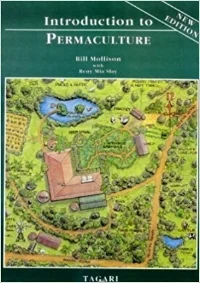
Bill Mollison's, "Introduction to Permaculture" is a great start for any new gardener or small-scale farmer.
Another fantastic resource, written by landscape designer Jessi Bloom and permaculture expert Dave Boehnlein, is the book titled, “Practical Permaculture for Home Landscapes, Your Community, and the Whole Earth." The authors cover all the bases: the basics, the design process, permaculture systems, useful plants, and delve into ‘invisible’ structures. There are many factors to consider in the implementation of a design of a home. For example, a family must consider structures, kid space, garden beds, and maybe even space for pets and backyard animals. Plus, depending on location, a homeowner may be working with existing structures or designing anew. Utilizing the principles of permaculture, whether it is in regards to water, waste, shelter, energy, and structures can help any homeowner live more in alignment and harmony with nature and the local ecosystems.
What are the principles of permaculture? In a condensed version from a number of resources (Mollison's Intro to Permaculture or Toby Hemenway's Gaias Garden were my faves):
1. Observe. Take time to notice subtle changes through the seasons before implementing any design. 2. Connect. Connect with nature, neighbors, local resources. 3. Catch and collect energy and materials. 4. Each element in a design has multiple functions. 5. Each function is supported by multiple elements. 6. Least amount of change for the greatest effect. 7. Small-scale intensive systems. 8. Optimize edge. 9. Collaborate with succession. 10. Use bio + renewable energy resources. 11. Turn problems into solutions. 12. Get a yield. 13. Biggest limit to abundance is creativity. 14. Mistakes are tools for learning.
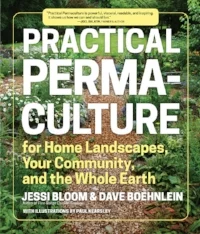
This is, hands-down, my favorite book on permaculture practices and design methods. All-encompassing with great details on how-to's, useful plants, and more.
Peter Bane, author of Permaculture Handbook for Town and Country, is one of the best teachers of North American permaculture. He focuses on the transformation of suburban and peri-urban allotments, and he shows how the elements of permaculture can produce extremely beneficial outcomes for our society at large. He approaches “garden-farming” with permaculture principles, considers the elements (think labor, water, soil, plants, structures, energy, trees), then lays out the potential outcomes. Huge benefits include improved diets, better agriculture practices, inclusive culture, tight-knit community, improved outreach, and change to outdated methods and beliefs.
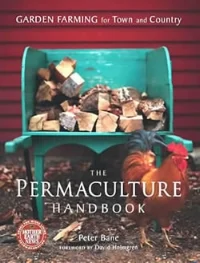
Peter Bane's, "The Permaculture Handbook" is HUGE for North American garden-farmers. This resource is fantastic for the suburban gardener who wants to transition their lot to a more productive garden space.
For over fifteen years, my passion has only grown for sustainability, renewable energy technology, ‘bio’tecture, organic gardening methods, and improving the standard of living for all. I care deeply for the earth, I hope our great-grandchildren have a beautiful earth to thrive on, and I want our community (the whole earth, really) to thrive just as much as we do.
Please refer to our Resources page for future links to great guides on small-scale gardens, design, permaculture, organic gardening, sustainable architecture, and more. The desire to learn more will never cease, so surely there will be more books and online resources that I will share with you all!
Thanks for reading and an abundance of joy to you,
G
Get Started Early (NOW!): Spring Garden Projects and More
My first ever blog post... Who knew I'd find the time to put down thoughts into word form outside of a journal, business plan, or the always evolving to-do list?! I'm excited to share the knowledge, family fun, and the love of gardening with the world. As they say, there's no time like the present, and right now, it's an exciting time of year in the Northern Hemisphere! If you’re visiting from the southern hemisphere, welcome and may this inspire for next growing season!!
It's March, and in Colorado, the temps are quickly rising. Just enough for us to work the soil, plant a few early spring crops, and give thanks for getting back in the garden. Over the past couple weeks as night temps begin to rise above freezing, we have been slowly amending with worm castings, fresh top soil, turning compost, adding manure, and taking off the layer of straw that protected small garden beds from the harsh winter winds. The soil is looking so fertile, and there are TONS of worms when I turn a small area of the garden beds! Garlic that was planted in October is coming up, slow to rise from being under a couple inches of straw mulch. Now that they are in the sun, I have no doubt they'll be quick to rise!!
Spring Projects and Tools
Now that it's time to get back into the garden, here are 5 ideas on projects and tools needed for this early spring: 1) A broadfork works great to loosen the grass roots around the garden plot fence line. Meadow Creature broadforks are fantastic quality and are easy enough to handle for small-scale garden projects. It may be needless to say, but in the community garden, we are often battling grass roots from the walkways that tend to creep into the beds... How to conquer it for more than one season, well, that's a whole other blog post! *Hint- we rely heavily on cardboard and wood mulch as shown in picture below! Grace enjoys using her 2) Hori Hori garden knife that's a fairly small size, and it works well for pulling the few "weeds" that found their way through the straw mulch. I say "weeds," in quotation, because we know that most opportunistic plants have medicinal properties and can be used for a variety of remedies, however, while we may enjoy Dandelion, our 200 neighbors may not. It's good to control the pollen and seeds from these "weeds" for now! Also, did you know that the term ‘weed’ is defined as an unwanted plant in the yard, and they sure have gotten a bad wrap in the past 100 years.
To plant in the spring, we do not mechanically till, but we do turn 3) fresh compost, top soil, and worm castings into the soil with the broadfork where we are about to plant annual vegetables. We love perennial plants, including vegetables, fruit, herbs, and flowers, but there are just some crops that we LOVE that have to be planted every year. According to multiple sources, such as Bill Mollison's Introduction to Permaculture, tilling over the long-term degrades the soil and makes the gardener work harder over time to replenish key nutrients required for successful harvests. Plus, we all prefer less pests, more beneficial bugs, and overall better soil health. Every fall, we layer about 3 inches of leaves in the soil, as well as, compost from the family food waste, garden materials, newspaper, and cardboard (no ink, staples, or tape!). Come spring, these have all broken down in the soil, making it gardener's gold! This gardener's gold is also known as sheet mulching. More on that later. To serve multi-purposes, we created 4) swale-like pathways, where rain runoff can seep into the straw mulch. This reduces weeds in the pathways, and when the garden beds are full of lush vegetation in July-August, the pathways have been some of the only places where weeds find opportunity to take root.
I thoroughly enjoy the small-scale garden, because it allows me to work more with my bare hands. For example, I LOVE to 5) sew seeds by hand, and I will carve their paths with the side of my hand. Acting like a hoe or trowel, my hand cuts into the plush soil to the depth needed, depending on the seed variety. This also requires the Forgotten Art of Squatting! True thing!! And it's an incredible practice for women, and men, to practice while gardening. It's a sacred connection to the earth, and it is an honor to garden. Our body movement matters, so I (we) like to stay conscious of this while gardening.
Spring Plantings and Tips on How to Plant Them
If I didn't just lose you on the Forgotten Art of Squatting, next I'll fill you in on a few types of cool-weather crops that can be planted in March. Depending on your zone, the following can be planted from seed directly into the soil as soon as it can be worked:
dark-leafy greens like kale, chard, spinach, mustard greens
peas
carrots
beets
radish
chervil
broccoli, kohlrabi, cauliflower, brussel sprouts
cover crops (we use a red crimson clover and a legume/oat mix).
We have tried two methods to growing snap peas, one just direct seed and another method where I was taught to soak the beans overnight in an unbleached paper towel that has been lightly soaked in filtered water. It speeds the germination rate, according to my mom. After testing both methods, I would have to admit that the soaked peas (and pole beans) sprouted sooner. However, the directly-seeded plants still sprouted and produced wonderfully! In this case, do what makes the most sense to you and if you’ve got the time and memory to soak prior to planting!
On March 8th, we planted the soaked Sugar Daddy Snap Peas, along with establishing a brand new patch of raspberries. Our community-garden plot neighbors gave us two varieties of raspberries, and now I'm attempting to have our very own!!! We simply cannot wait for fresh berries, berries in cream, raspberry syrup, raspberry crumble, and homemade jam! I feel a bit like Forest Gump and Bubba-Gump Shrimp with all the options!! :)
On March 12th, we planted celery, carrots, and beets. Carrots love consistent moisture, so we cover these with one of our row covers and check the moisture frequently to make sure they don't dry out! The late winter/early spring rains are scattered and can never be counted on to actually produce enough to cover the ground.
I'm beyond thrilled for all the new things happening this year. New ventures, new opportunities to learn, new plant varieties in the garden! I hope this is the first of many great posts about our garden experiences.
Happy gardening, friends!
G


